
Introduction
Factories and warehouses move heavy materials on a daily basis and use machines to assist workers in moving loads faster and more safely. Two widespread systems are AGVs and air film movers.
Both machines move materials in factories using different methods. AGVs are used for routine transport in warehouses and on production lines. Air film movers are used for moving heavy equipment on smooth floors.
This article tells the difference between AGVs and Air Film Movers.
What are AGVs?
AGVs or Automated Guided Vehicles are used to move materials, usually without drivers. They follow along a pre-set route in a factory or a warehouse. Guided by sensors, lasers, or magnetic strips, they perform redundant tasks such as moving goods from storage to production and shipping areas.
AGVs also operate 24/7, ensuring materials are moved regularly. They lift pallets to storage up to ten meters high. They typically work with loads of less than 100 tons. Technical considerations limit larger models of between 200 and 300 tons, and put a lot of pressure on the floors.
Shandong Electric Power Group in China has 300-ton AGVs. Their wheels are replaced four times a year. Heavy AGVs also create floor damage through concentrating ground pressure.
What are Air Film Movers?

Air film movers use a thin film of air to move heavy equipment. Compressed air provides a cushion between the load and the floor. This air cushion reduces friction. The load slides smoothly across the floor. Air film movers contain several important components:
- Air modules or air casters
- Control console
- Air hoses
- Compressed air supply
- Load platform
Air leaks through small holes in the air modules. This air forms a thin cushion under the platform. The cushion absorbs the weight and distributes it evenly across the floor. This helps prevent heavy loads from exerting pressure at a single point.
Air film movers typically handle loads ranging from 250 tons to 500 tons. Custom systems for heavy industries take loads up to 1000 tons. Factories use them for moving transformers, engines, aircraft sections, and steel rolls.
Advantages and Disadvantages of AGVs
AGVs have several advantages and a few limitations in warehouse and factory transport.
Advantages
- Driverless transport leads to fewer handling errors.
- AGVs do not take breaks and work twenty-four hours a day.
- They are used to support the ongoing movement of products inside the warehouse.
- AGVs are integrated with warehouse software such as ERP or MES.
- Sensors cause the vehicle to stop when people or equipment begin appearing ahead.
Disadvantages
- Heavy AGVs impose heavy demands on factory floors.
- Large vehicles weighing between 200 and 300 tons destroy the ground.
- Mostly, they get replaced due to their wheel wear.
- Some factories have wheels replaced 4 times a year.
- Ground repairs can cause downtime and extra maintenance issues.
Advantages and Disadvantages of Air Film Movers
Air film movers have a few benefits and limitations.
Advantages
- Air cushions provide the minimum friction between the load and the floor.
- Weight is distributed equally on the floor surface.
- This prevents damage to the ground during transport.
- Energy consumption remains reduced during daily work.
- The operators manage the system with minimal physical assistance.
Disadvantages
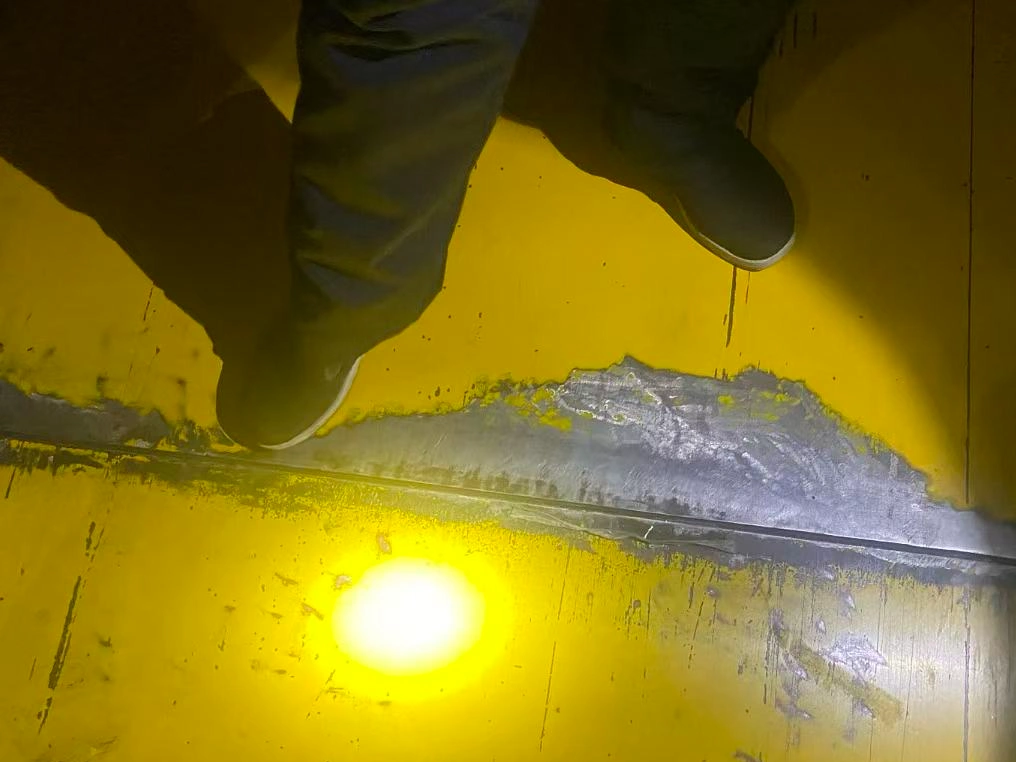
- Air film movers require a smooth and flat floor surface.
- Uneven floors will not allow the formation of stable air cushions.
- The system requires external air hoses for compressed air.
- Operators must work on the hose when moving.
Applications
Common AGV uses include:
- Moving materials from receiving spaces to storage racks
- Transporting parts from one production line to another
- Delivering pallets from storage areas to picking areas
- Transferring finished goods to shipping areas
Common air film mover uses include:
- Moving transformers weighing hundreds of tons
- Moving sections of aircraft around assembly plants
- Transporting steel rolls inside steel factories
- Transporting diesels and heavy machinery
- Dealing with paper rolls in paper manufacturing plants
Each system meets the requirements of different industrial transport applications.
Comparison between AGVs and Air Film Movers
| Aspect | AGVs (Automated Guided Vehicles) | Air Film Movers |
| Basic concept | Driverless vehicles move materials along fixed routes inside facilities | Platforms move heavy loads using a thin air cushion under the load |
| Guidance system | Sensors, magnetic strips, or laser guidance control movement | Operators guide the platform manually while the air cushion supports movement |
| Typical load capacity | Most models handle loads under 100 tons | Most systems handle 250 to 500 tons |
| Maximum load capacity | Large models between 200 and 300 tons are still under testing | Custom systems handle loads up to 1000 tons |
| Floor pressure | High pressure at wheel contact points | Weight spreads evenly across the floor |
| Maintenance needs | Wheel replacement, battery replacement, and floor repairs | Air hose checks and air system inspection |
| Operating environment | Warehouses, distribution centers, and production lines | Heavy equipment manufacturing and large industrial plants |
| Cost comparison | Higher purchase and maintenance cost | Lower cost for the same load capacity |
| Typical applications | Pallet transport, warehouse storage, production logistics | Moving transformers, steel rolls, aircraft sections, heavy engines |