
Introduction
The use of the right tools for moving heavy loads from one place to another. The job can be made easier and efficient by using the battery-powered machine skates. They can move in a 360-degree lateral rotation. You can use these tools to move the heavy loads in the corners and congested areas.
In many factories, warehouses, and industrial manufacturers are using these skates to manage the workload and avoid injuries. In this article, you can learn about the complete details of using battery-powered machine skates, including how to set them up for operation.
What are Battery-Powered Machine Skates?
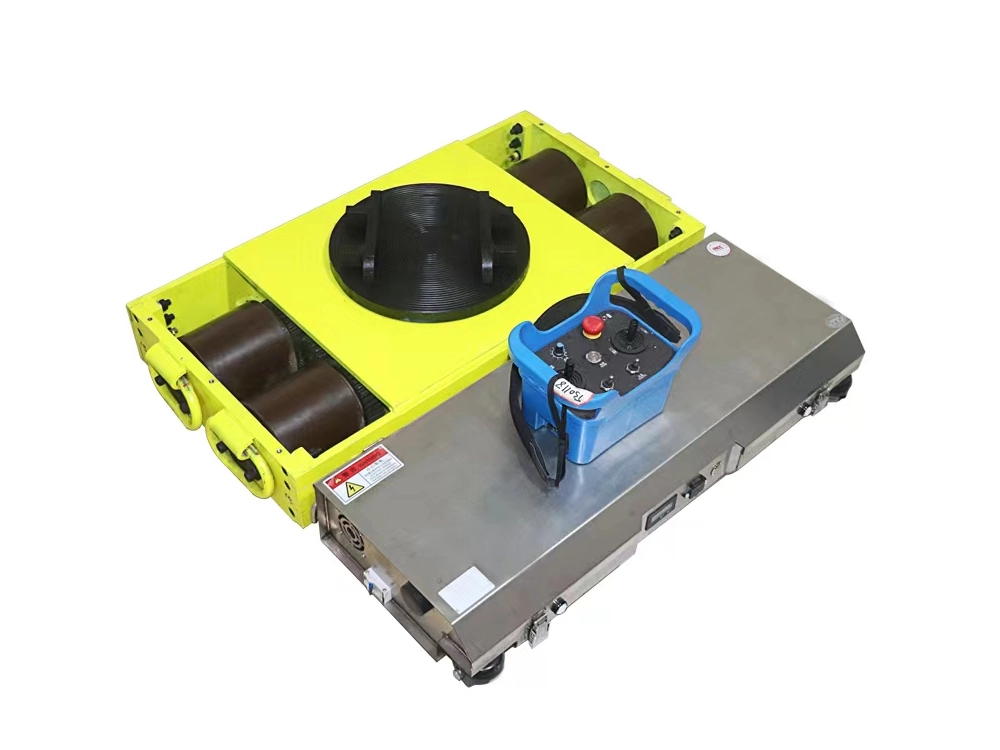
Battery-powered machine skates or robot dollies are small powered rollers. They are adapted to transport heavy mass on smooth and level surfaces. The average capacity range of battery-powered machine skates is around 10 to 100 tons.
Programmed by a remote control, these skates move laterally 360 degrees, capable of turning and rotating along the load, without any manual readjustment. A lithium battery powers it, which can work for 6-8 hours on a single charge.
With the load in place, the skates can be attached to follower wheels in the rear. Such a configuration allows providing a greater balance and controlling everything in this manner, using the remote.
Steps for Using Battery-Powered Machine Skates
To ensure the efficient operation of a machine skate, it is essential to follow some steps to ensure smooth operation. The process of using it involves three basic steps. Here is the detail of every step:
1. Preparation
- The fundamental need of the battery-powered skates is to prepare the surface so that it can glide the heavy load effortlessly. The surface is free from any debris or dirt. Moreover, it should be free from any damage or cracks.
- Load assessment involves assessing the size of the skate and the load. Whether they are compatible or not. The load-bearing capacity of the machine skates can be increased according to the load.
- There are different kinds of skates available in the market. You can get the best results if you are using the appropriate skate for the load. Such as, straight-line movement requires fixed skates and rotating or swivel skates for maneuverability.
- It is advised that the person must assess the skate, remote control, and charger. Make sure that all of the equipment is in good condition.
2. Installation and Setup
The following are the steps of installation and setup:
- Lifting is the initial step, raising the machine slightly up and placing it under the load. Lifting is done with a vertical jack or claw jack.
- Built-in skids or wooden blocks must adequately secure the load.
- The next step will be turning on the skate.
- Pairing the remote and the machine is a crucial step.
- It should be ensured that the load does not impact the hardware and that it is secure.
3. Completing the Move
When the skates are moving the load on the prescribed path, have your team situated on either side. Their work is to monitor the load and the equipment, keeping the skates in line and the load stable.
After the load has been moved to the last point:
- Then use the jack to raise the machine or equipment off the skates again.
- Slowly pull out the battery-powered skates and follower wheels.
- Unload the load to its resting position.
Check once again the area that has been used and make sure that all the tools or equipment are put away and that the skates are turned off and put properly. After setting all the steps, the skate can be moved. It is suggested that the speed of the skate must be kept under 8 meters per minute. For the safe operation, the manufacturer advises monitoring the machine skate from both sides.
Benefits of Using Battery-Powered Machine Skates
There are several advantages of using battery-powered machine skates:
- Labor efficiency: less pushing or pulling. Battery-powered machine skates require less labor force to operate.
- Precision Movement: Fine control of the movement in tight spaces is possible with remote operation and 360-degree turning.
- Less risk: When properly installed and supervised, there is a low possibility of injury or equipment destruction.
- Flexibility: Such as on the worksite, in warehouses, and in factories.
Choosing the Right Battery-Powered Machine Skates
Specific considerations must be kept in mind before choosing a suitable battery-powered machine skate for your needs.
1. Load Capacity
The chosen model should have a maximum load rating that is higher than the weight of the equipment to be moved. The usual weight-bearing capacity is around 10-100tons.
2. Battery Life
The runtime of the battery is also necessary, particularly when it comes to long or frequent moves. Identify skates that have large-capacity batteries or interchangeable battery packs. Brands are using a 120Ah lithium-ion battery that can work for 8 hours non-stop.
3. Recommended Brands
Cooperate with reliable manufacturers that specialize in heavy-load-moving equipment. Technical support, training resources, and spare parts that a brand offers can save time and cost in the long run. Visit our website https://cargotrolley.com/ for the best weight lifting solutions.
Conclusion
Machine skates are an efficient battery-powered machine that facilitates the transportation of heavy equipment and makes the task much safer. However, they have no vertical lift abilities, so they are primarily used in conjunction with a jack system to position them properly under the load.
To recap the safety operation:
- Raise the load using a vertical or claw jack first.
- Make sure skates and follower wheels are in line and are not blocked.
- Watch each side to stop movement or tilting.
- When loaded, maintain the speed at less than 8 meters per minute.
- When this is done, drop the load once more to get the skates out without any problem.