
In 2019, only 3% of vehicles were electric. But now it is a $200 billion business in 2025. The owner of an electric car must have a properly installed charging station. The charger wire should have a retractor to avoid any tripping and damage to the EV charger cable. The user must properly manage the charger cable to increase the charger’s durability and protection.
Before the invention of charger cable retractors, people used J-hooks or plugs to manage cables. At that time, that was an affordable option. The EV charger retractor gives the charging spot a clean, aesthetic look. If the user manages the cable correctly, it will prevent damage and tearing.
Using the retractor allows the user to obtain the required length. This post will teach you about EV charger cable management, the importance of managing the charging cable, and 2025 trends.
Why is EV Charging Cable Management Crucial?

Before getting the solution for managing EV charging cables, it is important to understand why it is essential to manage them. Getting the management solution will result in cost savings and reduce risk.
· Avoid Trips and Falls
If the cable isn’t managed correctly, it will create a mess on the floor. This mess will cause serious tripping hazards. There are many major accidents associated with the EV charging system, such as tripping and slipping. The initial step for using the EV charging system is to use the proper cable management systems. The charging cable is 4 to 10 meters (13 to 33 feet) long.
· Cable Longevity
If a user properly manages the EV charger cable, the charger’s lifespan is around 10-20 years. The need for a proper EV charger cable management system is to increase the lifespan and maintenance.
· Cost Management
A reasonable investment is required for the EV charging cable management system. That is around $800-$2000. It is not easy to replace the EV charger cable. If the user is not properly managing the charger cable and plug, dirt and moisture can accumulate. There might be a chance that it will get damaged by the car or the gardening tools.
· Avoid Electric Shock
The EV charging cable, mismanaged, will get torn and lie on the floor. There is a high risk of being shocked due to wear and tear on the charging cable.
· Preserving the Connector
It is critical to take care of the connector head of the EV charger cable. A management system is required to avoid shocks and trip hazards when using the retractors.
· Clean and Mess-free Station
The EV charger cable management system will play an essential role, as it gives charging stations a clean, neat appearance. The desired length of the charging cable is used, and the rest is left inside the EV charger retractor.
Common EV Charging Cable Management Problems and Diagnosis
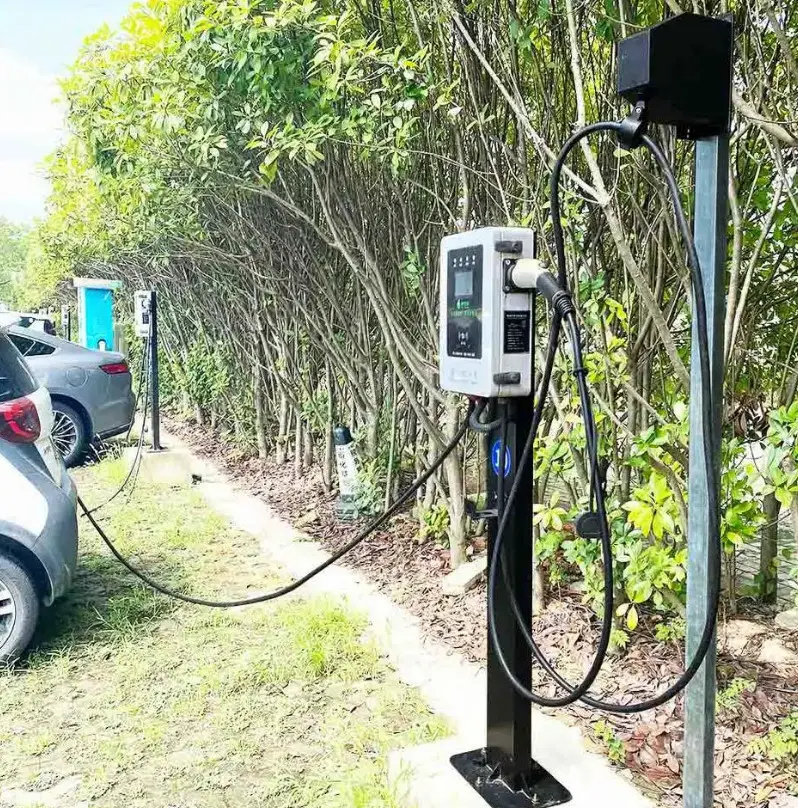
Electric vehicles are prevalent now. A poorly managed cable management system will lead to many problems. Here is the detail of these problems, their diagnoses, and solutions.
Tripping risks
Problem
One significant problem with charging cable management is the risk of tripping and slipping. If the cable is not managed properly, it will get tangled on the floor, in the garage, and on walkways. This would pose a significant risk to users and pedestrians, including falls and trips.
Diagnosis
- The charger cable will be on the floor.
- People will complain about the mismanagement of the EV charger cable.
- There will be visible wear and tear on the cable surface.
Solution
- The tripping risk can be managed by installing the J hooks and EV charger retractors.
- Must install a warning sign near the station to alert people to the potential risks.
- Try to make a secure covering for the cable lying on the floor.
Cable wear and tear
Problem
An EV charger cable will wear and tear unless installed properly. Cable wear and tear can cause slow charging and short circuits.
Diagnosis
- The user can notice the visible cracks and cuts on the cable surface.
- While charging the car, the connector head gets heated.
Solution
- The user should assess the EV cable daily.
- It is essential to replace the torn-up part of the cable.
- Use a proper covering or sleeves for the cable.
Cluttered storage
Problem
The most important thing to keep the EV charger cable intact is storage. An electric vehicle charging station does not consist of a single charger. The chargers are set in a row to make the charging station more efficient.
Diagnosis
- The EV chargers pile up near the charging spots.
- The tangled EV charger cable requires time to get untangled before charging.
- The charger has less accessibility in this case.
Solution
- A well-managed EV charger cable retractor system is the solution for managing the cluttered cables.
- The workers at the charging station must detangle the cables before piling them up.
- The ports and the cables must be labelled accordingly.
Aesthetic issues
Problem
In both commercial and residential areas, the EV charger cable management system should function correctly. The proper setup will enhance the place’s aesthetics. In a commercial area, a tidy place attracts more customers.
Diagnosis
- Piling up of the charger cables.
- The good visual impression of the charging station decreases as the mess increases.
Solution
- Try to select an EV charger retractor that matches the area’s ambiance.
- Use the underground passage to avoid the unpleasant sight.
Types of EV Charging Cable Management Solutions
· EV Cable Retractors
As the name suggests, EV charger cable retractors pull the cable under tension off the ground. So, cable management became easier for EV users.
- Pros: Automatic mode, increased safety, and better looks.
- Best used in: Business and high-traffic charging stations.
· J-Hooks and Wall Mounts
The users in the past used the J-hooks, which are the least expensive. They are easiest to use. Users can hang the EV charging cables manually on the wall when not in use.
- Pros: It is inexpensive and straightforward to install.
- Limitations: Manually wrapped; not as convenient as retractors.
· Cable Ramps and Flooring Protectors
The charger cable used on walkways or in commercial areas must be covered. It is a rubber or polyurethane covering suitable for all weathers.
- Benefits: It helps prevent vehicle or pedestrian collisions and reduces the risk of tripping.
- Specifically suitable: Outdoor and temporary installations.
· Overhead Cable Management Systems
In these systems, the cable is suspended from the ceiling by pulleys or retractors, then hung over the vehicle so the cable can be directly inserted into it.
- Benefits: There are no trip hazards, and the floor has maximum clearance.
- Best used in: Workshop garages and indoor parking areas.
· Combined Charging Stations
Current EV chargers are designed with cable management built into reels or underbody compartments, providing safety and a pleasing aesthetic.
- Benefits: Clutter-free, compact design and high-quality look.
How to Choose the Right EV Charging Cable Management System
Several factors, including the environment, user type, and budget determine the choice of the best system.
· Type of Location
- Wall hooks or retractors are advantageous for residential setups.
- Strong retractors and ramps are needed on the public charging points.
· Cable Length and Type
Make sure the selected system accommodates the cable in terms of diameter, mass, and plasticity. A DC fast charger cable that is 10 meters long will require more power for retraction than a 4-meter home charger.
· Weather Resistance and Durability
The outdoor stations must be provided with systems that are made of waterproof and UV-resistant materials.
· Ease of Use
Automatic retractors are also time-saving, particularly for frequent users of the stations.
· Budget Considerations
Wall hooks are cheap, however, less productive. In contrast, retractors or built-in systems would provide a long-term saving in durability and security.
Installation, Maintenance, and Troubleshooting
The EV charger cable requires installation and maintenance to function properly. There are specific troubleshooting issues associated with these charger cables.
· Installation
During installation, the worker must set the cable management system at a suitable height, such as 24 to 48 inches. The electrical connections must be proper.
· Maintenance
The EV charger cables must undergo weekly inspections to detect cracks and cuts. The retractor’s pulley system must be properly lubricated. Thus, the retractor runs smoothly.
· Troubleshooting
The cable retractors are not working correctly. There are some installation issues during mounting. The charger is getting overheated.
EV Charging Cable Management Trends in 2025
The market is seeing new trends in EV charging cable management in 2025.
- The manufacturers are working to develop a more efficient, suitable solution and to improve the user experience.
- There is increased use of EV charging cable management systems, such as cable retractors.
- Soon, the companies will be working on getting a cable management system with the least visible cables.
- The ceiling-mounted retractable EV charging cable management systems will make the process more tedious.
Conclusion
Using EV charger cable management systems will help users maintain safety, efficiency, and aesthetics in residential and commercial charging stations. A clean installation minimizes the risk of trips and extends cable longevity. It will increase user convenience. There are many solutions on the market, ranging in price, location, and frequency of use; therefore, users can choose one depending on their budget, whereabouts, and frequency of use. With technological development, cable management systems are becoming more innovative, safer, and greener.